
Step by Step Guide to Choosing a Woolmark Quilt for Your Home
Author: Halcyon Dreams Date Posted:16 November 2026
Choosing a quilt can feel complicated when there are different fillings, warmth levels, sizes and materials to consider. If you prefer natural bedding, a Woolmark Quilt can be a useful option to explore.
A Woolmark certified quilt gives shoppers information about the wool used in the product and helps them make a more informed bedding choice. However, certification is only one factor to consider.
You also need to think about wool quality, warmth, GSM, sleeping habits, bed size, climate and care requirements.
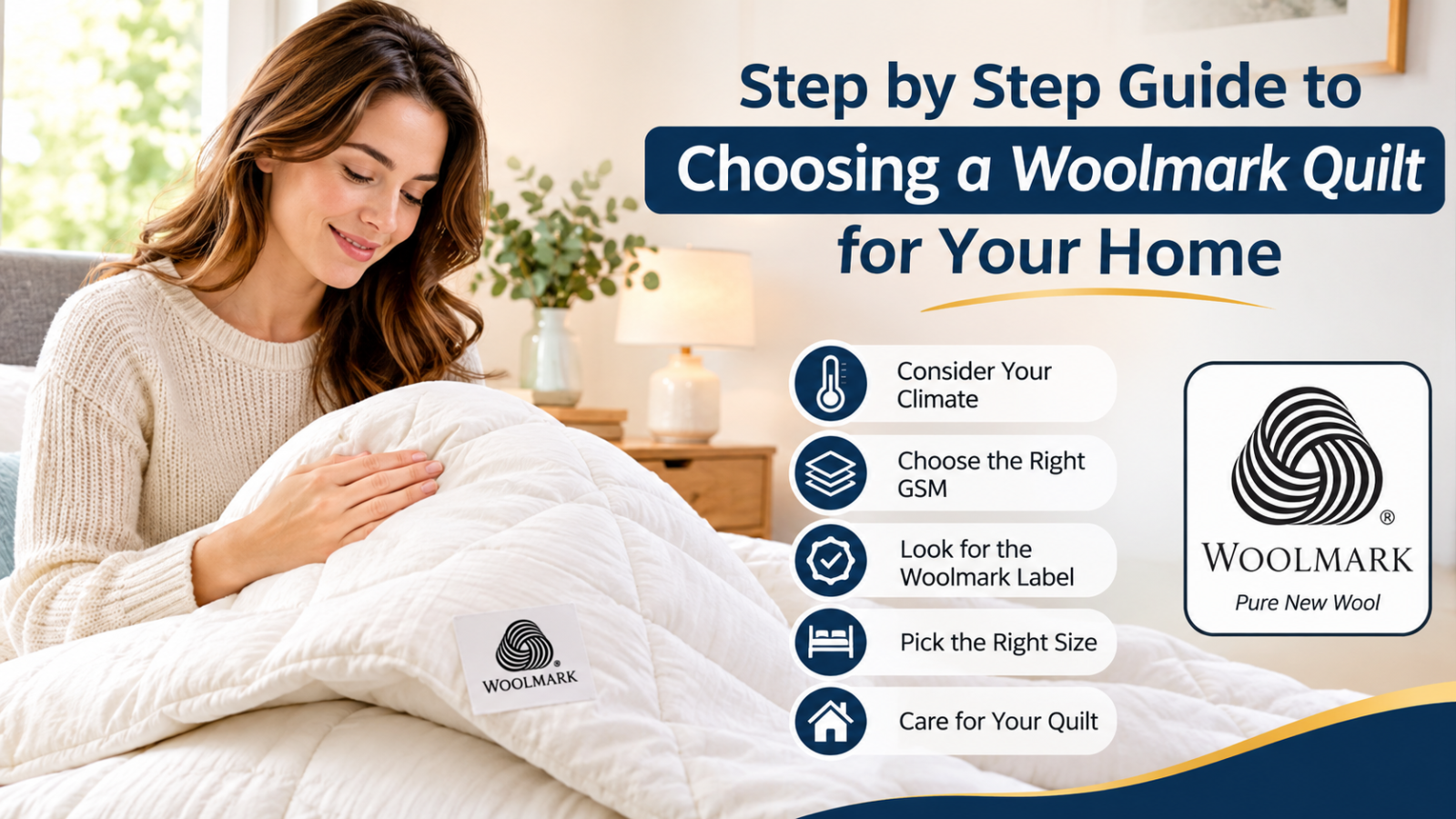
This step by step guide explains how to choose a Woolmark Quilt that suits your home and sleeping needs.
Step 1: Understand What Woolmark Certification Means
Start by understanding what you are buying.
The Woolmark mark is associated with wool products that meet defined quality requirements. For shoppers, this can provide useful information when comparing wool bedding.
However, certification should be considered alongside other product details.
Check the type of wool used, the filling weight, construction, size and care instructions.
A good buying decision should be based on the complete product rather than one feature.
Step 2: Check Whether the Quilt Uses Pure New Wool
The next step is to look at the wool filling.
Pure New Wool is an important consideration if you prefer natural bedding.
New wool comes from sheep and is used for its natural insulating and moisture management properties.
When choosing a quilt, check the product description carefully to understand what is inside the filling.
If natural materials are important to you, look for a quilt made with Pure New Wool rather than focusing only on the appearance or outer fabric.
Step 3: Consider How You Sleep
Your sleeping habits should influence your quilt choice.
Some people naturally sleep warm. Others prefer a warmer and more insulated sleeping environment.
Ask yourself a few simple questions.
Do you often feel hot while sleeping?
Do you wake up cold during the night?
Do you prefer a lightweight quilt?
Do you use heating or cooling in your bedroom?
Do you share your bed with someone who prefers a different temperature?
Your answers can help you decide which quilt warmth is most suitable.
There is no single quilt that works perfectly for every sleeper.
Step 4: Choose the Right GSM
GSM means grams per square metre.
It is commonly used to describe the weight of quilt filling. In general, a higher GSM provides more insulation, while a lower GSM creates a lighter quilt.
Australian wool quilts are available in different GSM options to suit different sleeping preferences and seasons.
For example, a 200GSM quilt can be suitable when lighter warmth is preferred. A 350GSM quilt can offer a more moderate level of insulation. A 500GSM quilt provides additional warmth, while a 700GSM option can be suitable for colder conditions.
Your choice should depend on your local climate and personal comfort.
Step 5: Think About the Australian Climate
Australia has a wide range of climates.
The bedding that works well in a warm region may not be ideal for someone living in a colder area.
Think about your bedroom rather than just the weather outside.
A well insulated bedroom may require different bedding from a room that becomes cold at night.
Air conditioning and heating can also affect your comfort.
If you experience different temperatures throughout the year, consider whether you need separate seasonal quilts or a flexible option that can adapt to changing conditions.
Step 6: Decide Whether You Need One Quilt or Multiple Warmth Options
Some sleepers prefer to use one quilt throughout the year.
Others prefer different quilts for summer and winter.
Both approaches can work.
A lighter quilt can be useful during warmer months, while a heavier wool quilt can provide greater insulation during colder weather.
A versatile option can also help households manage changing temperatures without constantly replacing their bedding.
The right choice depends on your climate, storage space and personal preference.
Step 7: Choose the Correct Bed Size
Once you have selected the warmth level, choose the right quilt size.
Your quilt should provide enough coverage for your mattress and sleeping position.
Common sizes include Single, King Single, Double, Queen and King.
If you share a bed, consider whether you prefer a standard fit or additional coverage around the sides.
A quilt that is too small may leave you without enough coverage during the night.
Always check the product dimensions before purchasing.
Step 8: Look at Natural Temperature Regulation
One of the reasons wool is popular for bedding is its natural ability to help manage temperature.
Wool can provide insulation while also allowing moisture vapour to move through the fibres.
This can help create a more balanced sleeping environment.
For Australian homes, this can be useful because temperatures can change throughout the year.
A Woolmark Quilt made with quality wool can therefore offer more than simple warmth.
The goal is to create comfortable bedding that works with your sleeping environment.
Step 9: Consider Moisture Management
Sleeping comfort is not only about temperature.
Moisture can also affect how comfortable you feel during the night.
Wool naturally interacts with moisture vapour. This can help support a more comfortable environment for sleepers who experience sweating during the night.
If you regularly wake up feeling uncomfortable because your bedding feels warm or damp, consider the material used in your quilt.
Natural wool can be worth considering if moisture management is an important part of your bedding decision.
Step 10: Check the Care Requirements
Before purchasing any quilt, check how it needs to be cared for.
Look at the washing instructions, drying requirements and storage recommendations.
If easy maintenance is important to you, check whether the specific quilt is machine washable.
Machine washable wool bedding can be particularly convenient for modern Australian households.
However, always follow the manufacturer's care instructions because washing requirements can vary between products.
Good care can help maintain the quilt's condition and extend its useful life.
Step 11: Check Australian Made and Wool Quality Features
If you prefer locally made bedding, check whether the quilt is Australian Made.
You can also look for other quality indicators such as Pure New Wool and Woolmark certification.
These details can help you understand more about the product before purchasing.
A quality Australian wool quilt can combine natural materials with practical features designed for everyday use.
Do not make your decision based on one feature alone.
Instead, consider the complete combination of wool quality, construction, warmth, certification and care requirements.
Step 12: Match the Quilt to Your Long Term Needs
A quilt is not something you usually want to replace every year.
Think about how you expect to use it over time.
If you want one quilt for most of the year, consider a versatile GSM.
If you prefer seasonal bedding, choose a warmth level that complements your other quilts.
Also consider how often the quilt will be washed, how it will be stored and who will use it.
Thinking about long term use can help you choose bedding that provides better value.
For more information about the long term value of wool bedding, read our guide, Are Wool Quilts Worth It? Benefits, Comfort and Long Term Value Explained.
How to Choose a Woolmark Quilt at a Glance
Choosing the right quilt becomes easier when you follow a simple process.
First, check whether the quilt has Woolmark certification.
Next, look at the wool used in the filling and consider whether Pure New Wool is important to you.
Then decide how warm you need your quilt to be.
Compare the GSM options available.
Consider your Australian climate and bedroom temperature.
Choose the correct size for your bed.
Check temperature regulation and moisture management features.
Finally, review the washing instructions and other product details.
This approach can help you compare quilts based on your actual needs rather than choosing only by appearance or price.
Which GSM Wool Quilt Should You Choose?
The right GSM depends on your sleeping environment.
A 200GSM quilt can suit warmer conditions and sleepers who prefer lighter bedding.
A 350GSM quilt can provide a more moderate level of warmth.
A 500GSM quilt can be suitable for sleepers who want additional insulation.
A 700GSM quilt can be useful for colder conditions or people who prefer a warmer sleeping environment.
If you are unsure, consider your current quilt.
If you regularly feel too warm, a lower GSM may be worth considering.
If you regularly feel cold, you may benefit from greater insulation.
Is a Woolmark Quilt Worth Considering?
A Woolmark Quilt can be worth considering if you want natural wool bedding and value recognised wool quality standards.
However, certification should not be the only factor in your decision.
Look at the wool quality, GSM, size, construction, care requirements and intended use.
Pure New Wool can provide natural properties that make wool suitable for bedding, while different GSM options allow you to choose a warmth level that suits your needs.
The best choice is the quilt that matches your sleeping habits, bedroom environment and expectations.
Frequently Asked Questions
What is a Woolmark Quilt?
A Woolmark Quilt is a wool quilt carrying Woolmark certification that indicates the product meets applicable wool quality requirements.
Is Pure New Wool good for quilts?
Yes. Pure New Wool is valued for its natural insulation, temperature regulation and moisture management properties.
What GSM wool quilt should I choose?
Choose the GSM based on your sleeping temperature, bedroom conditions and local climate. Lower GSM options generally provide lighter warmth, while higher GSM options provide more insulation.
Are Woolmark Quilts suitable for Australian homes?
Yes. Wool quilts can suit Australian homes because different GSM options allow sleepers to choose bedding for different climates and seasons.
How should I care for a wool quilt?
Always follow the manufacturer's care instructions. Check washing, drying and storage requirements before purchasing.


